An NFL play becomes dead when the runner's helmet comes completely off. Rule 7, Section 2, Article 1 includes that event among the reasons officials declare the ball dead. The runner cannot keep earning yards after that point.
The rule concerns the runner
Identify who possesses the ball when the helmet comes off. The provision says runner. A helmet coming off another player is a different situation and should not automatically be treated as the same dead-ball event.
Next, determine when the helmet is completely off. A shifted helmet and a fully removed helmet are different facts. Video that begins after the runner has already taken several additional steps can obscure the point at which the play ended by rule.
A whistle can follow the dead-ball event
Players may continue moving for a moment before the whistle is audible on television. That does not make every later yard part of the play. The rule establishes the event that ends the run, even when the visible or audible officiating response follows it.
This is related to the broader principle explained in our down-by-contact guide: the relevant event and the broadcast's most noticeable moment may be different. The forward progress rule is another reason a runner's final physical position can differ from the spot officials award.
Removing a helmet during a celebration
Approved Ruling 7.47 describes a runner removing his own helmet in celebration before reaching the goal line. The casebook ends the play where the helmet comes off and applies a separate unsportsmanlike-conduct penalty. Continuing into the end zone does not turn the run into a touchdown.
That example combines two questions: where the ball becomes dead and whether the player's behavior is a foul. They must be evaluated separately. A helmet accidentally coming off does not establish the same celebration conduct.
A foul can still require enforcement
If prohibited contact caused the helmet to come off, officials must also evaluate that contact under the relevant rule. The dead-ball provision does not replace the foul analysis. It is possible for the end of the run and a penalty decision to arise from the same sequence.
For a real play, avoid guessing a penalty from the loose helmet alone. The referee's announcement identifies the foul, if one was called. Replay footage must show the contact clearly before a specific explanation is justified.
A practical replay checklist
- Who had possession?
- When did that runner's helmet come completely off?
- Where was the ball at that moment?
- Was a separate foul announced, and what action caused it?
Those questions explain why a spectacular continuation can disappear from the official result. The runner's later movement does not extend a play that the rule has already ended.
Rules checked against the 2026 NFL playing rules. The NFL rulebook index provides the current edition, and the NFL football terms guide explains the surrounding terminology. These examples concern NFL rules; another league can use different requirements.
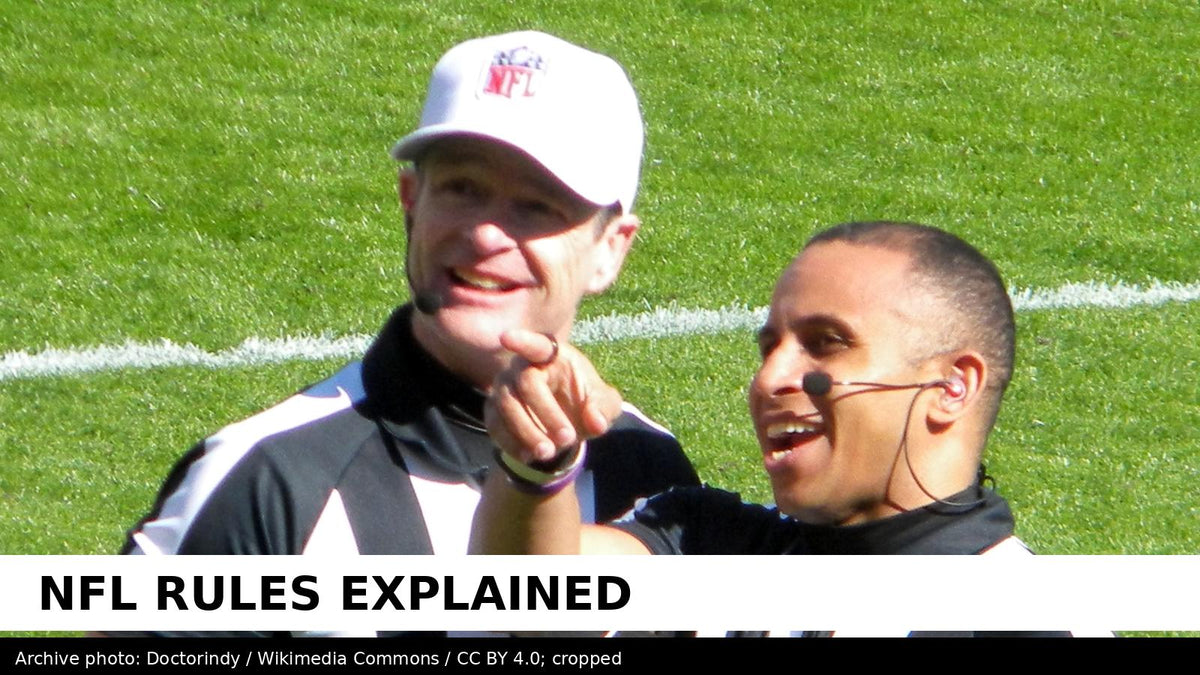
Archive photo: NFL officials Land Clark and Dominique Pender, December 31, 2023. Doctorindy via Wikimedia Commons, CC BY 4.0; cropped with a banner. The photograph illustrates officiating and does not depict the hypothetical plays.