An NFL blindside block is illegal when a player moves toward or parallel to his own end line and forcibly contacts an opponent with his helmet, forearm or shoulder, subject to the rule's close-line exception. Rule 12, Section 2, Article 7 sets a 15-yard penalty.
Start with the blocker's direction
The rule describes the path of the player initiating the block. Watch where that player is moving relative to his own end line. A return can reverse direction quickly, so it helps to identify which end zone his team is defending before evaluating the contact.
The label does not depend only on whether the opponent noticed the blocker. Direction and the method of forcible contact are explicit parts of the rule. A dramatic collision shown from behind the defender may hide the blocker's actual path.
The contact matters too
Helmet, forearm and shoulder contact are specified. The rulebook's definition therefore requires more than an observation that one player changed direction and another fell. Officials must judge the action that initiates the block.
Other restrictions can apply to a block even when it falls outside this particular definition. A player can be protected as a defenseless player, for example. The chop block rule addresses a separate combination of high and low blocks.
The close-line exception is limited
The blindside provision contains an exception for contact in the close-line play area before the ball leaves that area. The rule then explains specific immediate or slightly delayed actions by the player receiving the snap that do not count as the ball leaving the area.
Even there, restrictions on crackback and peel-back blocks remain. The exception should never be read as permission for any kind of forceful contact near the line. A complete ruling needs the ball's location, the sequence after the snap and the type of block.
A hypothetical return
Imagine a player helping a teammate on a return. The blocker turns back toward his own end line and drives a shoulder forcibly into a pursuing opponent away from close-line play. Those facts fit the rule's direction and contact elements.
Now imagine footage that only shows the impact, with the blocker entering from outside the frame. That angle does not establish his path. Reviewing the preceding seconds is necessary before confidently describing the call.
How to evaluate the announcement
- Identify the initiating blocker and his team's own end line.
- Trace the blocker's direction immediately before contact.
- Check whether helmet, forearm or shoulder delivers forcible contact.
- Consider the close-line provision and any other applicable foul.
The penalty listed for a blindside block is 15 yards. Where those yards are enforced depends on the surrounding play, so the referee's explanation and the down-and-distance display complete the picture.
Rules checked against the 2026 NFL playing rules. The NFL rulebook index provides the current edition, and the NFL football terms guide explains the surrounding terminology. These examples concern NFL rules; another league can use different requirements.
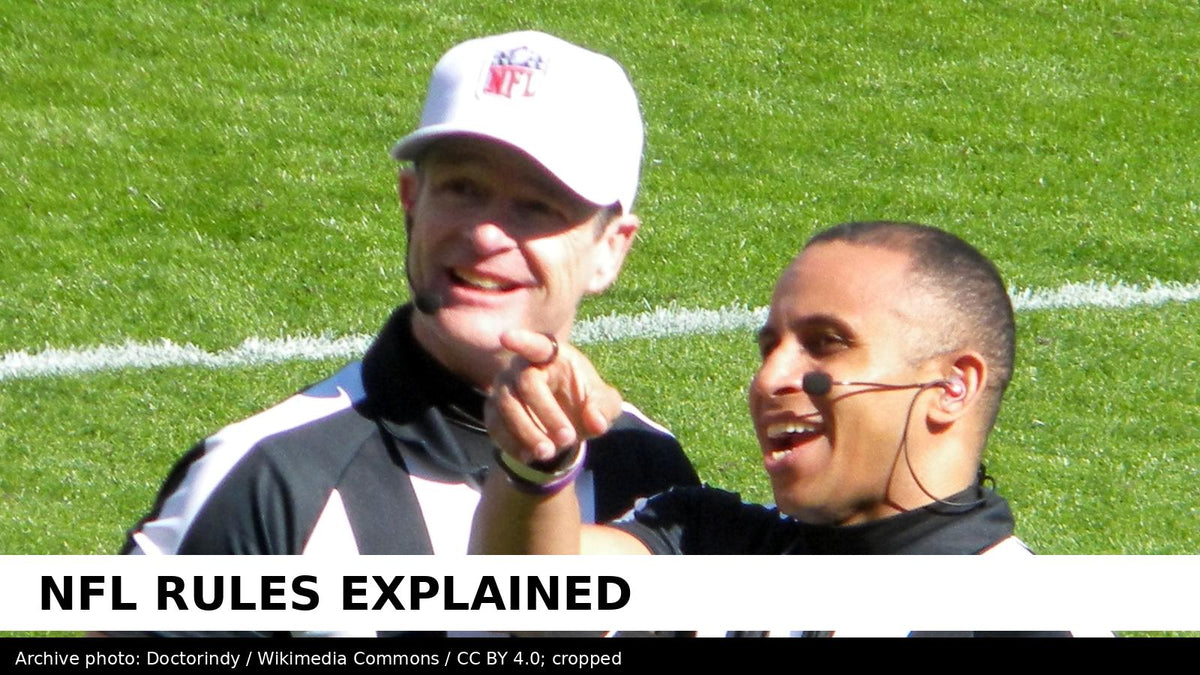
Archive photo: NFL officials Land Clark and Dominique Pender, December 31, 2023. Doctorindy via Wikimedia Commons, CC BY 4.0; cropped with a banner. The photograph illustrates officiating and does not depict the hypothetical plays.