Intentional grounding is easiest to follow when you watch the quarterback and the intended landing area together. A pass landing far from a receiver can raise the question, but the whole play determines the ruling.
The basic rule
The official NFL playing rules address a passer facing imminent lost yardage from defensive pressure who throws away from the direction and vicinity of an originally eligible receiver. An incomplete pass is not required for the foul.
Pocket and receiver questions
Outside-the-pocket throws have an exception when the pass reaches the extended line of scrimmage. On a hypothetical replay, first locate the passer relative to the pocket. Then locate where the ball lands. A tight camera shot of the ball alone may hide the information you need.
Exceptions to check
Physical contact that significantly affects the throwing motion can change the ruling. The rulebook also distinguishes an immediate permitted clock-stopping spike from a delayed spike. Avoid assuming every throw into the ground has the same explanation.
Penalty enforcement
Grounding includes loss of down, with distance or spot enforcement depending on where the pass occurs. A pass from the end zone can produce a safety. Listen to the announced spot before calculating the next down and distance.
Use a simple viewing note: pressure, pocket, receiver, landing point, ruling. Mark any item the replay does not show as unknown. The 2026 NFL rulebook and NFL football terms provide the reference language when a broadcast explanation leaves a question unanswered. These fictional viewing examples do not assess a particular disputed call.
Read our NFL overtime guide and injury report terminology for other common viewing questions.
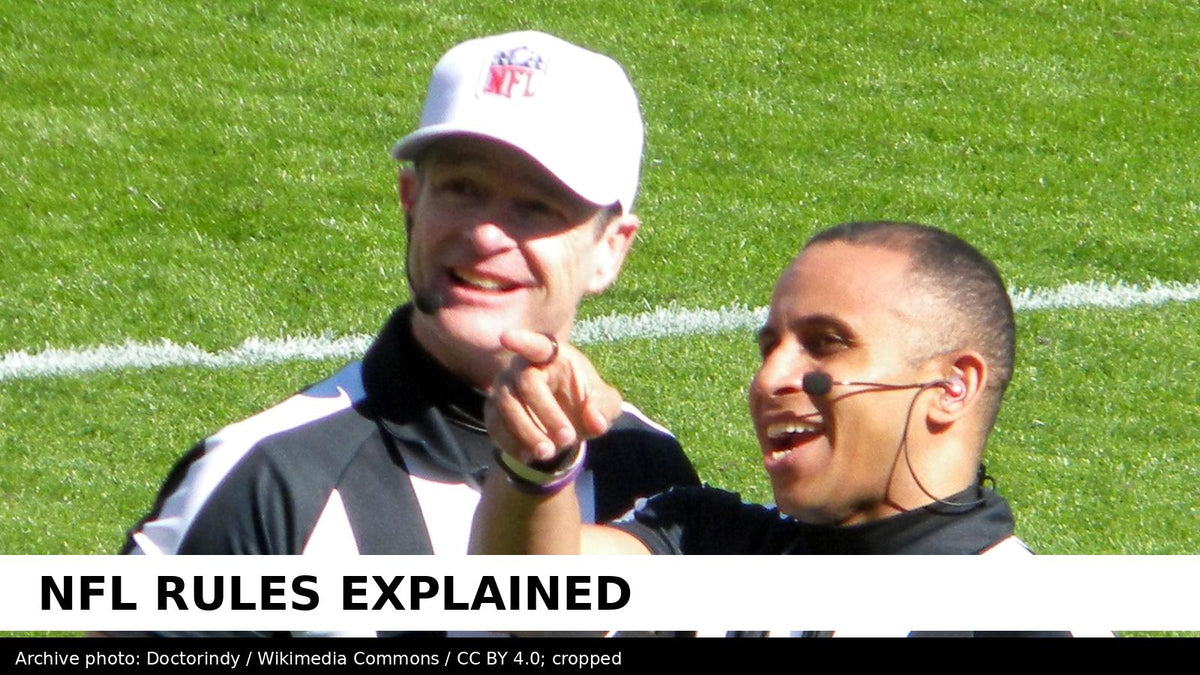
Archive photograph of NFL officials Land Clark and Dominique Pender, December 31, 2023, by Doctorindy on Wikimedia Commons. Cropped and banner added under Creative Commons Attribution 4.0. This photograph illustrates officiating generally.