A stopped game clock can restart before the next snap. Watch the official's signal and the period as well as the sideline.
Out of bounds
After a runner goes out, the clock usually restarts on the ready signal. It starts on the snap after a possession change, after the first-half two-minute warning, or inside the second half's final five minutes.
Incomplete passes
An incomplete forward pass stops the game clock until the next snap.
Timeouts
Team timeouts stop play. Injury, official and penalty stoppages can have different restart rules. Check the announced ruling.
End-of-half situations
Keep the game clock separate from the play clock. For a hypothetical viewing exercise, write down the quarter, remaining time, and reason the previous play ended. Compare an early-game sideline run with a late fourth-quarter sideline run. Then watch when the referee signals and when the displayed time moves. This sequence makes it easier to follow what happened without guessing from the broadcast graphic alone.
For the complete wording, use the official NFL rulebook PDF and the NFL rules reference page. This guide is a starting point for watching a play, rather than a ruling on a particular disputed call.
Continue with our NFL overtime guide or our NFL viewing guide.
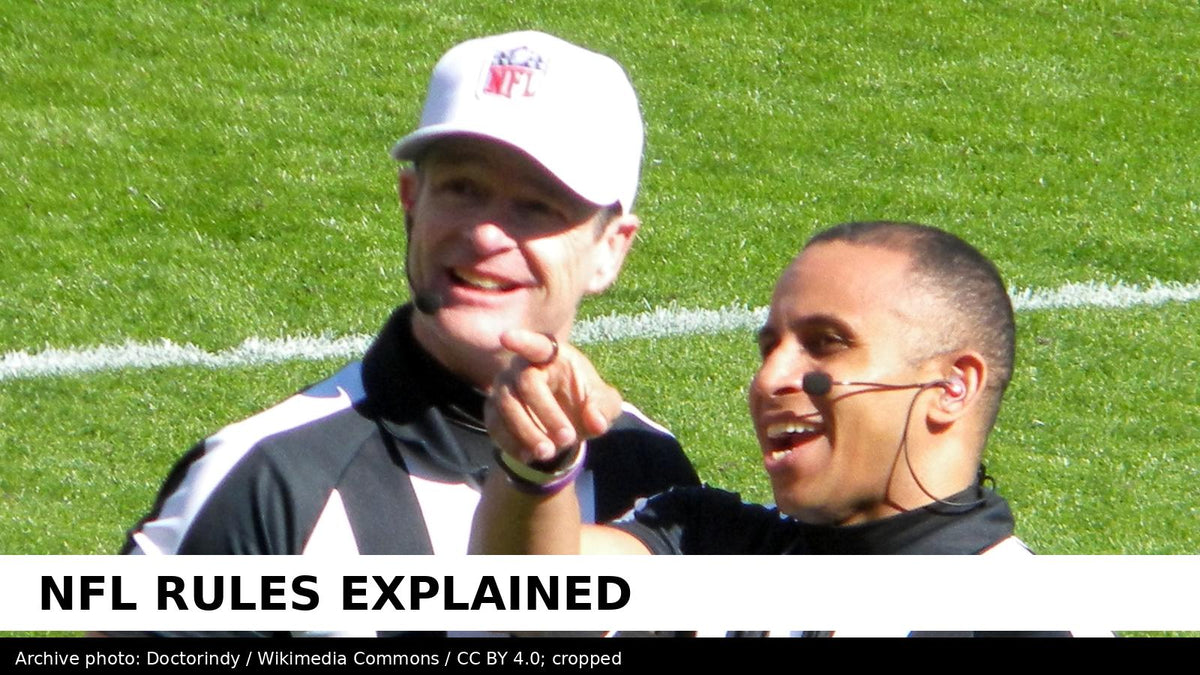
Archive photograph of NFL officials Land Clark and Dominique Pender, December 31, 2023, by Doctorindy on Wikimedia Commons. Cropped and banner added under Creative Commons Attribution 4.0. This photograph illustrates officiating generally.
The NFL play-clock glossary explains the separate 25-second and 40-second play clocks.