Updated November 11, 2026
The NFL kickoff looks nothing like it did a few years ago. Players from both teams line up close together, nobody on the coverage team gets a running start, and where the ball lands decides where the next drive begins. The format debuted as a one-year trial in 2024, was made permanent in 2025, and was adjusted again for 2026. This explainer walks through the current rule using the text of the 2026 Official Playing Rules of the NFL (Rule 6, Free Kicks), so every yard line here comes from the rulebook.
Why the Kickoff Changed
NFL.com's report on the 2025 owners' vote says the league introduced the "dynamic kickoff" in 2024 to bring back a play that had become largely ceremonial while protecting player health. The same report says kickoff returns rose from a 21.8% return rate to 32.8% in 2024, and owners voted in April 2025 to keep the format and move the touchback spot on kicks into the end zone from the 30 to the 35. NFL.com's Oct. 21, 2025 report said the return rate through Week 7 of that season had reached 79.3%.
For 2026, NFL.com's summary of the rules approved for 2026 lists three kickoff changes adopted at the March league meeting: letting the kicking team declare an onside kick at any time, removing the incentive to kick out of bounds when kicking from the 50-yard line, and modifying alignment for receiving players in the setup zone. The rulebook's 2026 change list matches those three items.
Where Players Line Up
Rule 6 sets three lines and two zones:
- The kicker kicks from his own 35-yard line on a kickoff (his own 20 on a safety kick).
- The other 10 kicking-team players line up on the receiving team's 40-yard line with their front foot on the line and both feet on the ground. The rule also spreads them out: at least two between the sideline and the yard-line numbers, at least two between the numbers and the hash marks, and at least two between the hash marks.
- The receiving team's restraining line is its own 35-yard line. The "setup zone" is the five yards between its 35 and its 30.
- The landing zone runs from the receiving team's 20-yard line to its goal line.
Under the 2026 text, at least nine receiving players must be in the setup zone. At least five of them must have a front foot on the 35 (six if the team puts more than nine in the zone), and up to four may stand in the zone behind that line. Players outside the setup zone, usually the returners, must stay behind the 20 until the ball is kicked and behind the 30 until the ball lands or is touched by a receiving-team player in the landing zone or end zone, per Rule 6, Section 1, Article 3(b)(4).
The key to the format is who can move and when. Kicking-team players other than the kicker, and receiving players in the setup zone, must keep both feet on the ground until the ball touches the ground or a player in the landing zone or end zone. The kicker may not cross the area around the 50-yard line until then. The result is a play that starts more like a scrimmage play, with less space and less speed at the moment of contact.

What Counts as a Touchback Now
A kick into the end zone that stays inbounds is a live ball and must be returned or downed. Where a touchback is spotted depends on how the ball got there, per Rule 6, Section 1, Article 5:
- At the 35-yard line if, without first touching the ground or a player in the landing zone, the kick goes out of bounds behind the goal line, hits the goal post or crossbar, or lands at or beyond the goal line and is downed in the end zone.
- At the 20-yard line if the kick touches the ground or a player in the landing zone first and is then downed in the end zone or goes out of bounds behind the goal line.
- At the 20-yard line on any touchback when the kickoff is from the 50. This is the 2026 change. A team usually kicks from the 50 after a penalty moves its spot forward.
The difference between the 35 and the 20 is the incentive. Booming the ball through the end zone hands the opponent good field position, so kickers aim for the landing zone and force a return.
Short Kicks and Kicks Out of Bounds
A kickoff that lands short of the landing zone, or goes out of bounds, is a foul. Under Rule 6, Section 2, Article 4, the receiving team may take the ball 25 yards from the spot of the kick, which on a normal kickoff from the 35 is its own 40-yard line, or at the out-of-bounds spot or the spot where a short kick landed if that is closer than 25 yards.
Onside Kicks Under the 2026 Rule
The onside kick is a separate formation that must be declared. Rule 6, Article 6 says the kicking team may declare one "at any time during the game" by notifying the Referee before the play clock starts. NFL.com's 2025 report notes that in 2024 only a trailing team could try one, and only in the fourth quarter.
On a declared onside kick, the kicking team lines up on its own 35 with no more than five players on either side of the ball. The receiving team's restraining line is 10 yards ahead, and eight or nine receiving players must line up within 15 yards behind it. The kicking team can recover the ball once it reaches the receiving team's restraining line or touches a receiving player. An onside kick that goes untouched past the onside kick setup zone is a 15-yard unsportsmanlike conduct penalty, and the receiving team takes possession.
Blocking Rules on Returns
Two blocking limits come straight from the rulebook. A wedge block, two or more players lined up shoulder to shoulder within two yards who move forward together, is not allowed at any time. A double-team block is legal only by receiving players who started in the setup zone. Both fouls carry a 15-yard penalty.
What Fantasy and Special-Teams Fans Should Watch
More returns mean field position swings more often on kickoffs, and drives start in a wider range of places. Watch where kickers place the ball, how often returners bring it out from the end zone, and whether teams use the any-time onside option as a surprise early in games. Check whether your fantasy league scores return yards at all before reading too much into a returner's role.
For other rule questions, our explainer on NFL overtime rules covers the extra period, and our guide to using Grok to understand NFL rules shows how to check a call against the rulebook. Our Week 10 NFL schedule lists kickoff times.
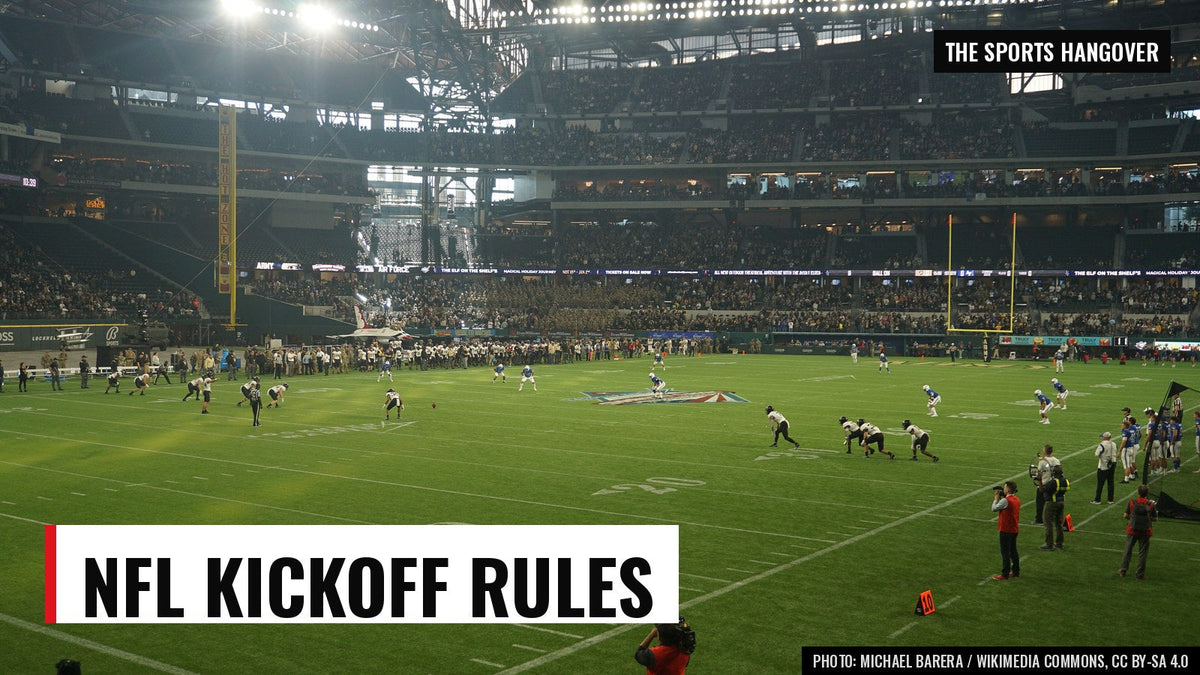
Featured photo: the opening kickoff of the 2021 Army vs. Air Force game, by Michael Barera via Wikimedia Commons (CC BY-SA 4.0), cropped with a short banner.
NFL Kickoff Rules: Questions
Where is the touchback on an NFL kickoff in 2026?
At the 35-yard line if the kick reaches the end zone without touching the landing zone first, and at the 20 if it touches the landing zone first. Any touchback on a kickoff from the 50 goes to the 20.
Can NFL teams try an onside kick at any time in 2026?
Yes. The 2026 rulebook lets the kicking team declare an onside kick at any time during the game by telling the Referee before the play clock starts.
Where do players line up on an NFL kickoff?
The kicker is at his own 35, the other 10 kicking players are on the receiving team's 40, and at least nine receiving players are in the setup zone between their own 35 and 30.