Updated November 11, 2026
The NFL trade deadline passed at 4:00 p.m. ET on Tuesday, November 10. One day later, a second rule took effect. Starting Wednesday, November 11, experienced veterans who are released no longer go straight to free agency. They go through waivers first, the same as younger players. This post explains what changed on November 11, who it applies to, what it means for a released veteran, and why it shapes how contenders and rebuilding teams handle the rest of the season. For the basics of the claiming process itself, start with our explainer on how NFL waivers work.
What Changes on November 11
The league's 2026-27 important dates calendar on NFL.com lists two entries back to back. For November 10: "All trading ends for 2026 at 4:00 p.m., New York time." For November 11: "Players with at least four previous pension-credited seasons are subject to the waiver system for the remainder of the regular season and postseason."
That second sentence is the whole rule. Before November 11, a team could release a veteran with four or more credited seasons and he became a free agent immediately, free to pick his next team. From November 11 through the end of the postseason, that same release puts his contract on waivers, where the other 31 clubs can claim it.
Who Counts as a Vested Veteran
"Vested veteran" is the common name for a player with at least four credited seasons. The NFL Football Operations contract language glossary describes the waiver rule this way: a contract for a player with fewer than four credited seasons "is subject to waivers at all times," while a contract for a player with four or more credited seasons "is not subject to waivers when released from the day after the Super Bowl through the trade deadline. After this date and outside of this period, the contract must be placed on waivers and can be claimed by another team."
One detail trips people up. The waiver rule counts pension-credited seasons. The collective bargaining agreement tracks that separately from the accrued seasons used for free agency. The CBA's practice squad article, as published by Over The Cap, refers to games counting "for purposes of earning a Credited Season for both minimum salary and pension credit and an Accrued Season for purposes of free agency," which shows the two are separate measures. A player's free agency status and his waiver status are not always the same thing, so check which count a report is using.
What Happened Before This Date
From the day after the Super Bowl through the trade deadline, a released vested veteran was a free agent the moment his contract was terminated. That is why veteran releases in the offseason and in the first half of the season usually come with immediate visits and signings elsewhere. NFL.com's long-running explainer on waived, cut and released put it plainly: "During the offseason and all the way up to the trading deadline, a vested veteran gets released."
It also explains some deadline-week behavior. A team that wanted to let a veteran choose his next stop had a reason to release him on or before November 10. After that, the decision is no longer his alone.

How a Claim Works After the Deadline
Once a vested veteran is placed on waivers, the process is the same one used for younger players all season. Any club can put in a claim. If more than one club claims him, the club with the highest waiver priority gets him. If nobody claims him, he clears waivers and becomes a free agent who can sign anywhere. Our waivers explainer covers the claiming period and how priority switches to reverse standings after Week 3, with the teams holding the worst records at the front of the line.
The claiming team takes on the contract as it stands. That makes salary part of every decision. A veteran on an expensive deal may clear waivers because no club wants the remaining money, then sign a new, cheaper contract as a free agent. A veteran on a modest contract is more likely to be claimed.
Why This Matters for Contenders and Sellers
With trading closed until 2027, waivers and free agency are the only ways left for teams to add players from outside the building. Our post on how teams still add players after the deadline walks through those routes. The November 11 rule changes the math on both sides.
- Contenders sit near the back of the waiver order because priority follows the standings. If a useful veteran is released now, a weaker team gets the first chance to claim him. A contender may only land him if he clears.
- Rebuilding teams get the first look at veterans released by other clubs. Claiming one means inheriting his contract, which a team with cap space may be willing to do.
- Released veterans lose control of their next stop unless they clear. A player hoping to join a playoff team can end up claimed by a club near the bottom of the standings.
- Releasing teams know their former player could land with a division rival if that rival sits ahead of them in priority. That can affect when, or whether, a release happens.
Practice squad moves follow their own rules, including elevations that revert without waivers. Our guide to NFL practice squad rules covers those.
How to Read a Transaction Report From Here On
For the rest of the 2026 season, "released" and "waived" will look more alike in the daily transaction lists. When a veteran's name shows up, the useful questions are whether he has four or more pension-credited seasons, whether anyone claimed him, and which team was awarded the claim. NFL.com's official transactions page lists each move once it is processed. Social posts that say a veteran "is expected to sign" somewhere should be read with the waiver step in mind, because a claim by a higher-priority team comes first.
The exemption returns after the season. Per NFL Football Operations, vested veterans are again not subject to waivers starting the day after the Super Bowl. For how the deadline itself worked, see our explainer on how the NFL trade deadline works.
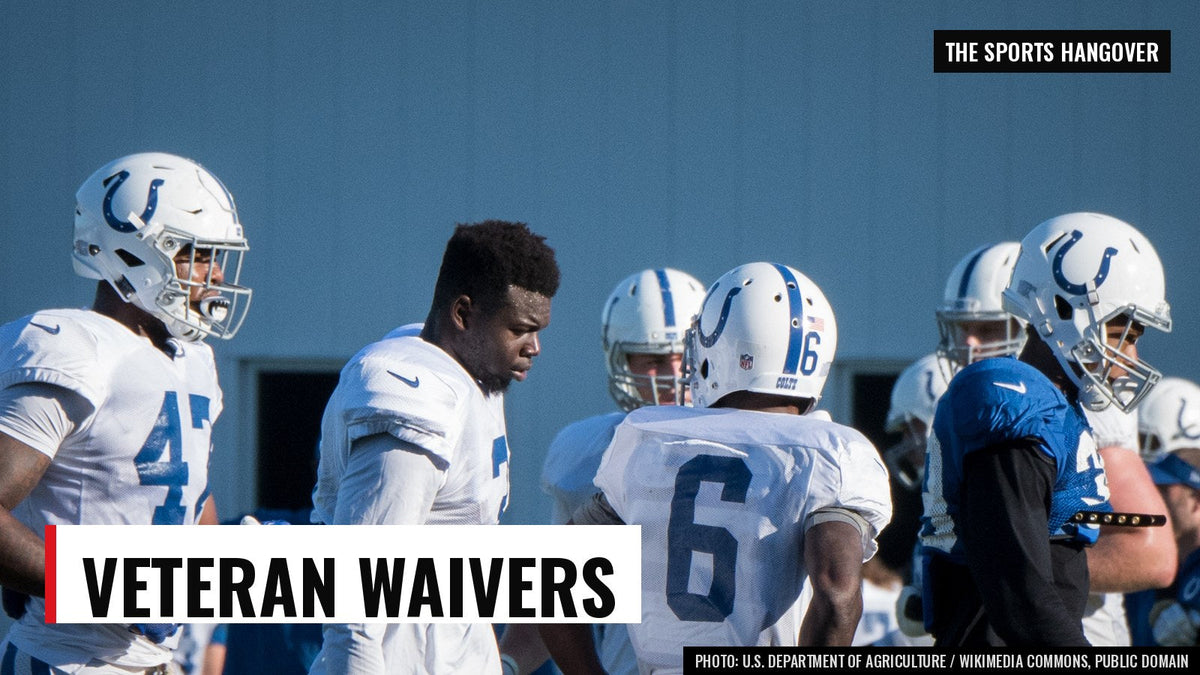
Featured photo: Indianapolis Colts players at 2017 training camp, by the U.S. Department of Agriculture via Wikimedia Commons (public domain), cropped with a short banner.
Veteran Waivers After November 11: Questions
Do NFL veterans go on waivers after the trade deadline?
Yes. Starting November 11, 2026, players with at least four previous pension-credited seasons are subject to waivers for the rest of the regular season and postseason, per NFL.com's 2026-27 important dates calendar.
What is a vested veteran in the NFL?
A player with at least four credited seasons. From the day after the Super Bowl through the trade deadline, a released vested veteran is not subject to waivers and becomes a free agent right away, per NFL Football Operations.
What happens if a released veteran is not claimed?
He clears waivers and becomes a free agent who can sign with any team, including on a new contract. A team that claims him takes on his existing contract.