NFL rules define tripping as using a leg or foot to obstruct an opponent, including a runner. It is a 15-yard personal foul under Rule 12, Section 2, Article 14. A defensive tripping foul also gives the offense an automatic first down.
The action officials are looking for
Rule 3, Section 39 provides the definition. The relevant action is using the leg or foot to obstruct another player. A player ending up on the ground does not, on its own, explain how that obstruction occurred.
When reviewing a possible foul, follow the defender or blocker before contact. Did the player extend a leg into the opponent's path? Was the obstruction caused by that leg or by a different kind of contact? The full sequence helps distinguish the rule from a general description that somebody tripped.
It also applies to the ball carrier
The current rule expressly includes the runner. Using a foot to obstruct a ball carrier is subject to the same prohibition. The rules do not provide a general exception allowing a defender to trip someone because that player has the ball.
A tackle involving the upper body can raise different questions. Our horse-collar tackle guide explains one specific restriction. The facemask penalty explainer covers another. Identifying the actual contact avoids applying the wrong rule to a fall.
Tripping and a leg whip
The casebook's Approved Ruling 12.13 uses a blocker who falls after being beaten by a pass rusher. Extending a leg without a whipping motion into the rusher produces a tripping ruling. Whipping the leg around to make contact produces unnecessary roughness for a leg whip.
The casebook treats the whipping action as a personal foul regardless of whether the contact is above or below the opponent's knees. That detail matters because a viewer may otherwise focus only on how low the contact occurred. Both actions in that example carry a 15-yard penalty.
Penalty and possible disqualification
Rule 12 states the 15-yard penalty and the automatic first down when the defense commits it. It also allows disqualification for a flagrant act when officials observe the entire action. An ordinary tripping flag does not automatically mean a player is ejected.
The exact enforcement spot depends on the play and the applicable penalty rules. A foul during a run can require information about where the action happened. Listen for the referee's full announcement rather than assuming every personal foul is measured from the same place.
What to watch next time
Look for the leg's movement, the opponent it obstructs and whether there is a whipping action. Then separate the foul classification from the enforcement. Those are the details that turn a replay of a player falling into an explanation of the actual call.
Rules checked against the 2026 NFL playing rules. The NFL rulebook index provides the current edition, and the NFL football terms guide explains the surrounding terminology. These examples concern NFL rules; another league can use different requirements.
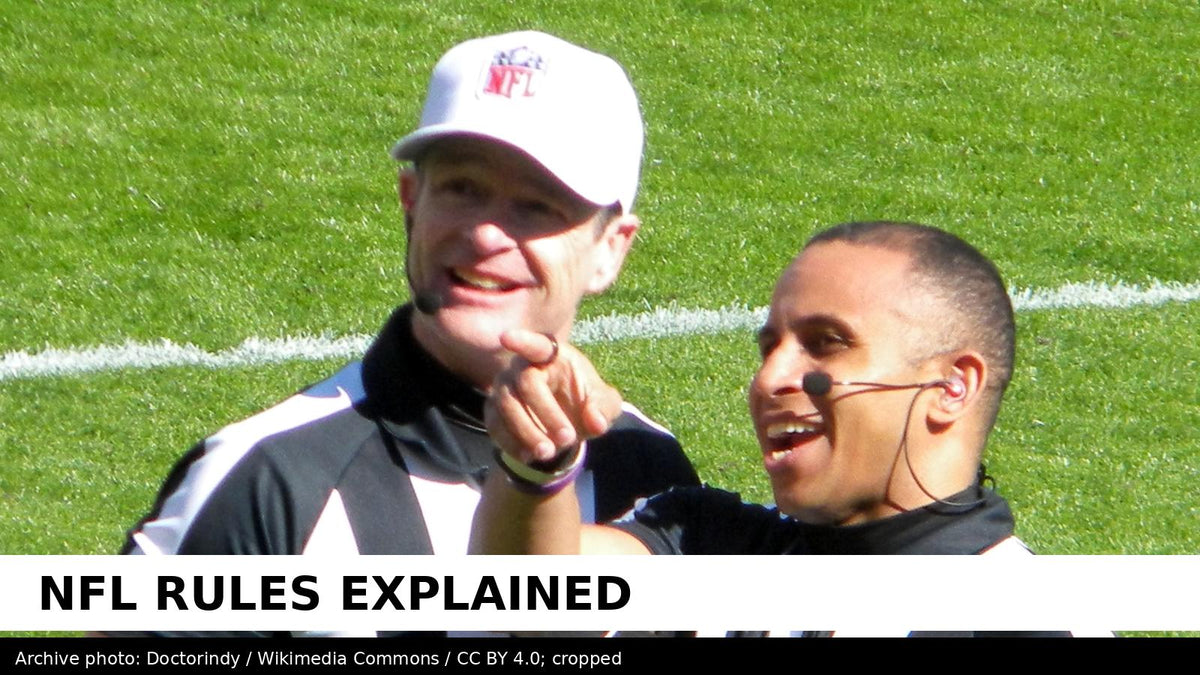
Archive photo: NFL officials Land Clark and Dominique Pender, December 31, 2023. Doctorindy via Wikimedia Commons, CC BY 4.0; cropped with a banner. The photograph illustrates officiating and does not depict the hypothetical plays.