Updated November 10, 2026
A fantasy football trade is a swap of players between two teams in your league. The mechanics are simple: one manager proposes, the other accepts, and the league's platform processes the deal. The judgment is harder. This guide covers how to tell whether a trade helps you, why bye weeks change player value in the middle of the season, and the red flags worth checking before you hit accept. It uses no projected points and no "accept this trade" examples with real players, because those go stale within days. Your league's own settings decide the details, so read them first.
How a Fantasy Trade Gets Processed
Most platforms follow the same basic flow. One manager sends an offer, the other accepts or rejects it, and an accepted trade either goes through right away or enters a review period. Depending on the league settings, the commissioner or the other managers may be able to veto it during that window. Leagues also set their own trade deadline, which is separate from the NFL's. The league's real deadline is Nov. 10, 2026, at 4:00 p.m. ET, per the NFL's 2026-27 important dates, but your fantasy league's cutoff could be earlier or later. Check the league settings page for the review period, the veto rules and the deadline before you start negotiating.
What Makes a Trade Fair
A fair trade improves both teams' starting lineups for the rest of the season, even if last week's point totals don't match. Those two things can look very different on paper.
Start with your own weekly lineup, not the other manager's roster. Ask which starting slot is your weakest, and whether the trade makes that slot better without opening a new hole somewhere else. A deal that gives you two good bench players for one starter often makes your team worse, because only one of them will play each week. The reverse is also true: trading depth you never start for one clear upgrade is how many teams get better at midseason.
Position Surplus vs. Scarcity
Value depends on what each team needs. If you have three running backs who start every week and a weak second receiver, your third running back is worth more to a manager who is short at the position than he is to you. That is the basic logic of most good trades: you send surplus to a team that lacks it and get back help at your own thin spot.
Scarcity also depends on your league's format. Leagues that start two quarterbacks or use a flex spot value positions differently than a standard lineup does. Our fantasy football strategy guide covers how roster settings shape these decisions from the draft forward.

How Bye Weeks Change Value
The next two weeks show why byes matter. In Week 10, the Bears, Broncos, Eagles and Buccaneers are off, per NFL.com's Week 10 schedule. In Week 11, six teams are off: the Falcons, Browns, Packers, Rams, Patriots and Seahawks, according to the Week 11 schedule. If several of your starters play for those six teams, Week 11 could leave you short even if your roster is strong on paper.
That gives you two things to check before any trade. First, do the players you would receive share a bye week with your current starters? Stacking the same bye can turn a good trade into a lost week. Second, how many games does each player have left before your league's playoffs begin? A player who has already had his bye is worth slightly more to a team trying to fill every week, all else equal. For the Week 10 byes specifically, our Week 10 bye-week fantasy guide lists fill-in options.
Red Flags in Trade Offers
- Selling high only on a recent big week. One big game can come from a long touchdown or an injury to a teammate. Look at several weeks of usage, such as snaps, targets and carries, before you pay for one result.
- Injury designations you have not checked. Before accepting, look the player up on the NFL.com injury report and read the team's latest update. A player listed as questionable or out changes the value of the deal.
- Two-for-one offers that fill your bench, not your lineup. Count how many of the incoming players would actually start for you.
- Real NFL trades changing roles. When a team trades for a player at the NFL deadline, roles on both teams can shift. Wait for the depth chart and the first game before assuming a player's role went up or down.
When to Wait Until After the Waiver Run
Sometimes the best move is not a trade. If your weak spot can be filled by a player on waivers, the waiver claim costs you nothing on your roster. In many leagues, waivers process early in the week, and a player who gets a bigger role after an injury or a trade often shows up there first. Making the claim, then trading from a stronger position, is often better than overpaying in a panic after a bad Sunday. Our explainer on NFL waivers covers the real league's system, while fantasy leagues set their own waiver order, such as rolling priority or a free-agent budget, in the league settings.
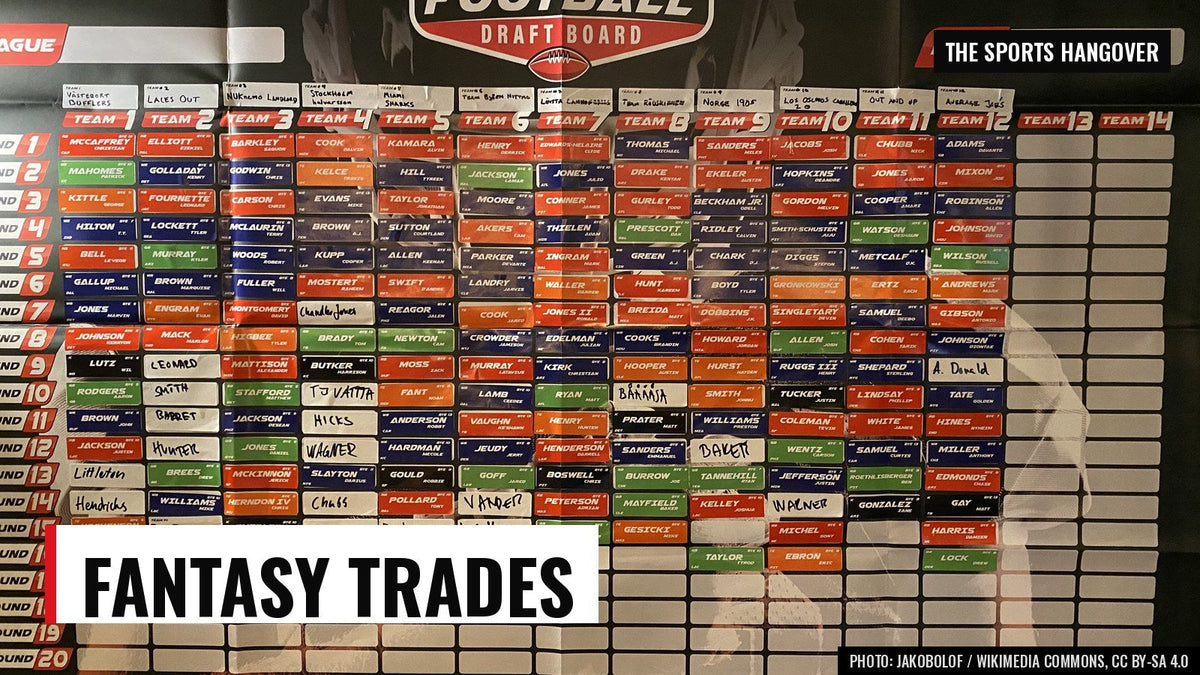
Featured photo: a fantasy football draft board, by Jakobolof via Wikimedia Commons (CC BY-SA 4.0), cropped with a short banner.
Fantasy Football Trades: Frequently Asked Questions
Can a fantasy football trade be vetoed?
It depends on your league settings. Some leagues let the commissioner veto trades, some let managers vote during a review period, and some process trades with no review. Check your league's settings page.
Is the fantasy trade deadline the same as the NFL trade deadline?
No. The NFL's 2026 trade deadline is Nov. 10 at 4:00 p.m. ET. Your fantasy league sets its own deadline, which can be earlier or later.
Which NFL teams are on bye in Week 11 of 2026?
Six teams: the Falcons, Browns, Packers, Rams, Patriots and Seahawks, according to NFL.com's Week 11 schedule.