21+ only. Gambling problem? Call 1-800-GAMBLER. Paid contests and sports betting are legal only in some states, and the rules differ by state. Check your state's law before you enter a paid pool or place any bet.
Updated October 31, 2026
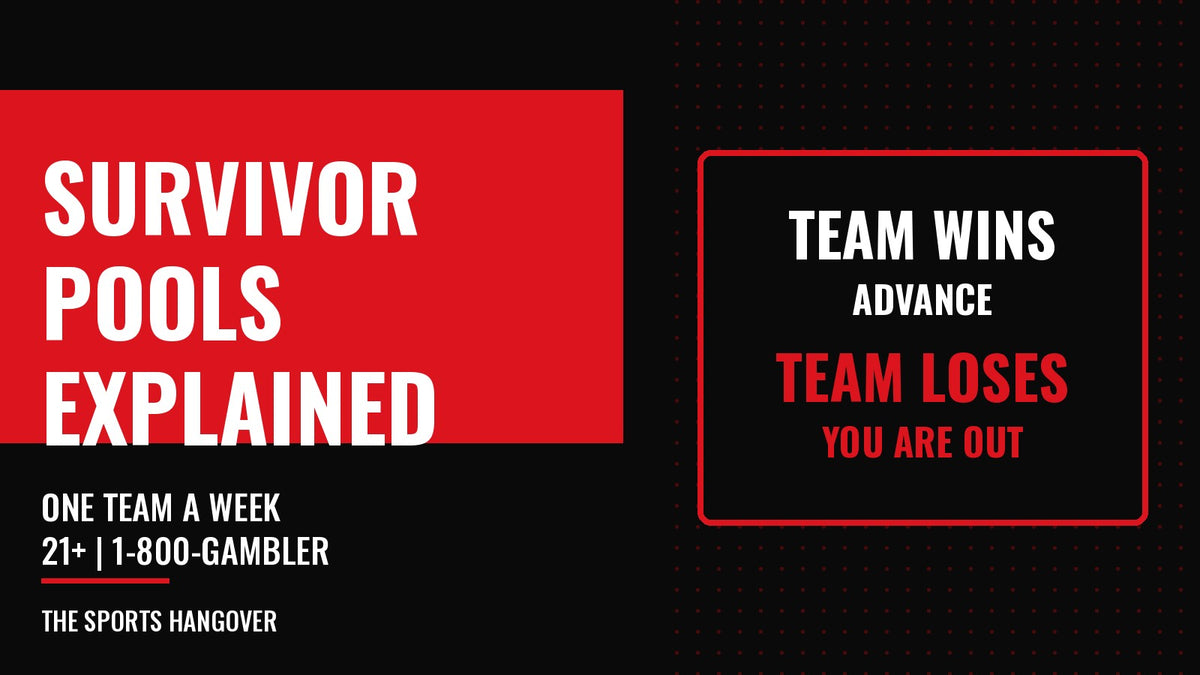
A survivor pool, also called an eliminator pool, is an NFL contest with one simple rule set: each week you choose one team to win its game, and if that team loses, you are out. You can use each team only once all season. The last entry still alive wins. This post explains the standard rules, the details that change from one pool to another, and the math that makes a full season hard to survive.
How a survivor pool works
ESPN's free NFL Survivor game is a good reference because its rules are published in full. Each week, an entry chooses one NFL team to win. If the team wins, the entry advances to the next week. If it loses, the entry is eliminated. Each team can be used only once, so a team you use in Week 1 is gone for the rest of the season. Missing a week also counts as a loss (ESPN NFL Survivor, How to Play and Official Rules).
ESPN's 2026 contest runs 18 weeks, from Week 1 on September 9, 2026, through Week 18, which ends January 10, 2027. With 32 teams and 18 weeks, an entry that lasts the full season uses 18 teams and never uses the other 14.
Rules that change from pool to pool
The core idea is the same everywhere, but the details are not. Read your pool's rules before Week 1, because these differences decide real outcomes.
Ties
ESPN treats a tie as a win: entries that chose either team advance. Sleeper's NFL Survivor game does the opposite: if the game ends in a tie and you chose either team, you are eliminated (Sleeper Support, NFL Survivor).
Straight up or against the spread
Most survivor pools grade straight up, meaning your team only has to win. Sleeper also offers a spread format, where your team has to cover the point spread to survive. Under that format, a favorite at -6.5 has to win by 7 or more. If you're new to spreads, see What Does Against the Spread Mean?
Deadlines
ESPN uses a rolling deadline: each game closes to new choices at its own scheduled kickoff, so you can wait for a Sunday or Monday game. Sleeper lets you change your choice any time before your selected game kicks off. Some office pools use one deadline for the whole week instead.
Tiebreakers and multiple entries
If more than one entry survives the season, ESPN's contest breaks the tie by total margin of victory across all of an entry's winning teams, then by random drawing. ESPN allows up to 25 entries per person. Private pools set their own limits.
Postponed or canceled games
Under ESPN's rules, if a chosen game is postponed, canceled or forfeited, the choice is canceled and the entry must make a new one from that week's remaining games or be eliminated.
| Rule | ESPN NFL Survivor | Sleeper NFL Survivor |
|---|---|---|
| Each team usable | Once per season | Once per season |
| Tie game | Counts as a win | Eliminated |
| Grading | Straight up | Straight up by default; spread option |
| Deadline | Each game's kickoff | Your selected game's kickoff |
| Entries | Up to 25 per person | Set by the pool |
Sources: ESPN and Sleeper rules pages linked above.

Why surviving a full season is hard
Each week is a separate test, and the chances multiply. As a simple illustration, if every team you chose had a 70% chance to win, the chance of surviving three straight weeks would be 0.7 x 0.7 x 0.7, or about 34.3%. At 75% a week, five straight weeks works out to about 23.7%. These are hypothetical numbers to show the math, not estimates for any real game.
That compounding is the main reason a full season is hard to survive, and it is why the once-per-team rule matters. The teams most likely to win early are the same teams you may want later.
Ways people think about each week
Reading win chances from the betting market
A moneyline price can be converted into an implied win probability. A team at -150 implies about 60.0% before the bookmaker's margin is removed. Our explainer on implied probability shows the formula. It is an estimate of the market's view, not a promise.
Now versus later
Using a strong team early lowers your risk that week but removes that team from later weeks. Some players plan several weeks ahead and map out which teams they expect to need. Bye weeks matter too, since a team on bye has no game to win that week.
What the rest of the pool does
In a large pool, if many entries choose the same team and it loses, a lot of the field goes out at once. Some players weigh how popular a team is, not only its chance to win. This only matters if your pool shows that information or you can reasonably estimate it.
Survivor pools and fantasy football
A survivor pool is closer to a weekly forecasting contest than to fantasy football, which is about drafting and managing a roster. Many people play both. For the roster side, see our older post on fantasy football draft strategy.
Frequently asked questions
What happens in a survivor pool if your team ties?
It depends on the pool. ESPN counts a tie as a win. Sleeper eliminates entries whose team tied. Check your pool's rules.
Can you use the same team twice in a survivor pool?
Not in the standard format. ESPN and Sleeper both allow each team only once per season.
Are survivor pools against the spread?
Most are straight up, meaning your team just has to win. Some, including an option on Sleeper, grade against the spread instead.
Research and education only. Nothing here is betting advice. Sources: ESPN NFL Survivor 2026, How to Play and Official Rules; Sleeper Support, NFL Survivor. Legal status by state: American Gaming Association state gaming map. Help: National Council on Problem Gambling.
21+ only. Gambling problem? Call 1-800-GAMBLER. Paid contests and sports betting are legal only in some states. Check your state's law. Play and bet only what you can afford to lose.
The Sports Hangover